
How to Beat ATS & AI Resume Screening Tools in 2026
Getting your resume past an Applicant Tracking System (ATS) is no longer about stuffing keywords into your resume. In 2026, AI hiring tools analyze context, skills, achievements, and real-world impact. To pass modern ATS screening, your resume needs to prove what you have achieved — not just list what you know. The candidates who stand […]
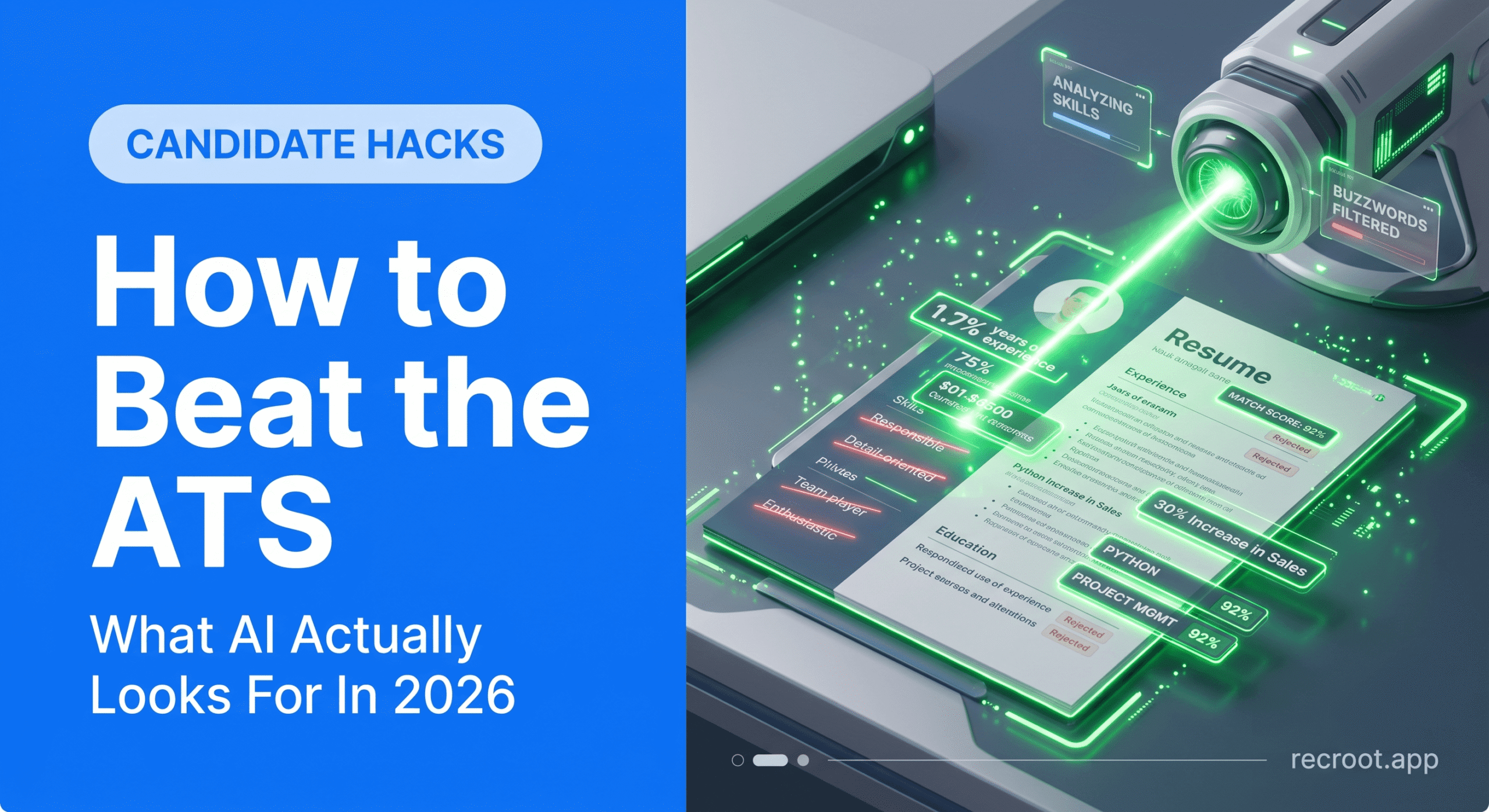
In 2026, AI hiring tools analyze context, skills, achievements, and real-world impact. To pass modern ATS screening, your resume needs to prove what you have achieved — not just list what you know.
The candidates who stand out are the ones who show measurable results, explain their experience clearly, and use an ATS-friendly resume format.
Quick Answer: How Do You Beat an AI Applicant Tracking System (ATS) in 2026?
Modern ATS platforms do more than match keywords. AI-powered hiring systems analyze your resume to understand your skills, experience, and achievements.
To improve your chances of passing AI resume screening:
- Use the STAR method: Structure your resume bullet points using Situation, Task, Action, and Result.
- Show measurable results: Include percentages, revenue impact, time saved, performance improvements, and other numbers.
- Use an ATS-friendly design: Keep your resume simple with a clean single-column layout.
Why Copy-Pasting Keywords Fails with Modern ATS Systems
For years, candidates were told to copy keywords from job descriptions and add them to their resumes. This worked when ATS systems mainly searched for exact keyword matches.
Today, AI hiring tools are much smarter. They do not just count keywords — they analyze the context behind your experience.
If a job description requires “Python,” simply adding “Python” to your skills section is not enough.
AI systems look for evidence that you actually used Python to build something, solve problems, automate processes, or improve business results.
A strong resume does not just say what skills you have. It shows how you used those skills.
The 3-Step AI Resume Checklist to Pass ATS Screening
Follow these three steps to create a resume that modern AI hiring systems can understand.
1. Show Numbers and Measurable Results
AI screening systems recognize measurable achievements because they provide proof of your impact.
Instead of only describing your responsibilities, explain the results you created.
Bad Resume Example
Responsible for making the database run faster.
Why this is weak:
This statement does not explain:
- How much faster it became
- What technology was used
- What business impact was created
Good Resume Example
Improved MongoDB database performance, reducing search response time by 35% and saving the company $4,000 per month in infrastructure costs.
Why this works:
This example includes:
- Technology used
- Specific improvement
- Measurable business impact
Numbers make your achievements easier for both ATS systems and recruiters to understand.
2. Use the STAR Method for Resume Bullet Points
AI hiring tools can better understand resumes that follow a clear structure.
The STAR method helps turn simple job responsibilities into achievement-focused statements.
What is the STAR Method?
Situation: What problem existed?
Task: What responsibility did you take?
Action: What steps did you perform?
Result: What measurable outcome did you achieve?
Bad Resume Example
Handled customer support software bugs.
Why this is weak:
It only describes a responsibility. It does not explain your impact.
Good Resume Example
Fixed a critical checkout system bug, reducing customer complaints by 50% within one week.
Why this works:
It clearly explains:
- The problem
- The action taken
- The measurable result
3. Keep Your Resume Design Simple and ATS-Friendly
Many candidates choose creative resume templates because they look impressive.
However, complex designs can create problems for ATS software.
AI systems may struggle to read:
- Two-column layouts
- Graphics
- Icons
- Progress bars
- Photos
- Decorative fonts
Use an ATS-Friendly Resume Format Instead
A better format includes:
- Single-column layout
- Standard fonts
- Clear section headings
- Simple bullet points
- Clean PDF export
A simple resume that is easy for AI systems to read is often more effective than a highly designed resume.
Passing ATS Is Only the First Step: Prepare for AI Interviews
Getting through ATS screening is only the beginning.
As AI hiring becomes more common, companies are using automated interviews and AI-powered hiring platforms to evaluate candidates after the application stage.
Your resume may say that you improved a system by 35%, but during an interview, you need to explain:
- What problem did you solve?
- What approach did you take?
- Which tools did you use?
- How did you measure success?
A strong resume gets you noticed. Your ability to explain your experience helps you get hired.
How to Practice for AI-Powered Interviews
Many candidates struggle because writing about achievements is easier than explaining them verbally.
Practicing your answers out loud helps improve:
- Confidence
- Communication skills
- Answer structure
- Interview performance
Candidates can use tools like Recroot to practice workplace conversations and AI interviews in a private environment.
Recroot helps you simulate real hiring scenarios, receive feedback, and improve your answers before the actual interview.
Final Thoughts: Build a Resume That Proves Your Impact
In 2026, beating ATS systems is not about finding tricks to manipulate algorithms.
It is about creating a resume that clearly communicates:
- Your skills
- Your experience
- Your achievements
- Your measurable impact
Focus on:
- Showing results instead of responsibilities
- Using the STAR method
- Keeping your resume ATS-friendly
- Practicing how you explain your experience
A great resume opens the door. Strong communication helps you walk through it.
Frequently Asked Questions
An ATS resume is a resume designed to be easily read and analyzed by Applicant Tracking Systems used by companies during the hiring process.
Many ATS platforms can have difficulty processing complex layouts, images, and graphics. A simple text-based resume format is usually safer.
Yes, keywords still matter. However, modern AI systems evaluate keywords in context. Candidates should show how they used skills instead of only listing them.
A single-column resume with standard fonts, clear headings, and achievement-based bullet points is generally the safest ATS-friendly format.
-

How to Present Confidently at Work (Even If Public Speaking Isn’t Your Strength)
A practical guide to improving your presentation skills, communicating with confidence, and delivering effective presentations…
-

How to Lead Meetings at Work: Practical Tips for Managers and Professionals
Learn how to prepare, facilitate, and lead productive meetings that keep discussions focused, decisions clear,…
-

How to Speak Confidently at Work: What I Learnt After Struggling for the First Five Years of My Career
A practical guide to improving workplace communication, speaking up in meetings and building confidence as…
