
AI Skills for Resume: Why ATS Systems Reject Freshers
You spent days perfecting your resume. You carefully formatted every section, highlighted your projects, and submitted your application for an entry-level software engineering role. Then, less than a minute later, you received an automated rejection email. It is unlikely that a human recruiter reviewed your resume in that time. Your application was most likely filtered […]
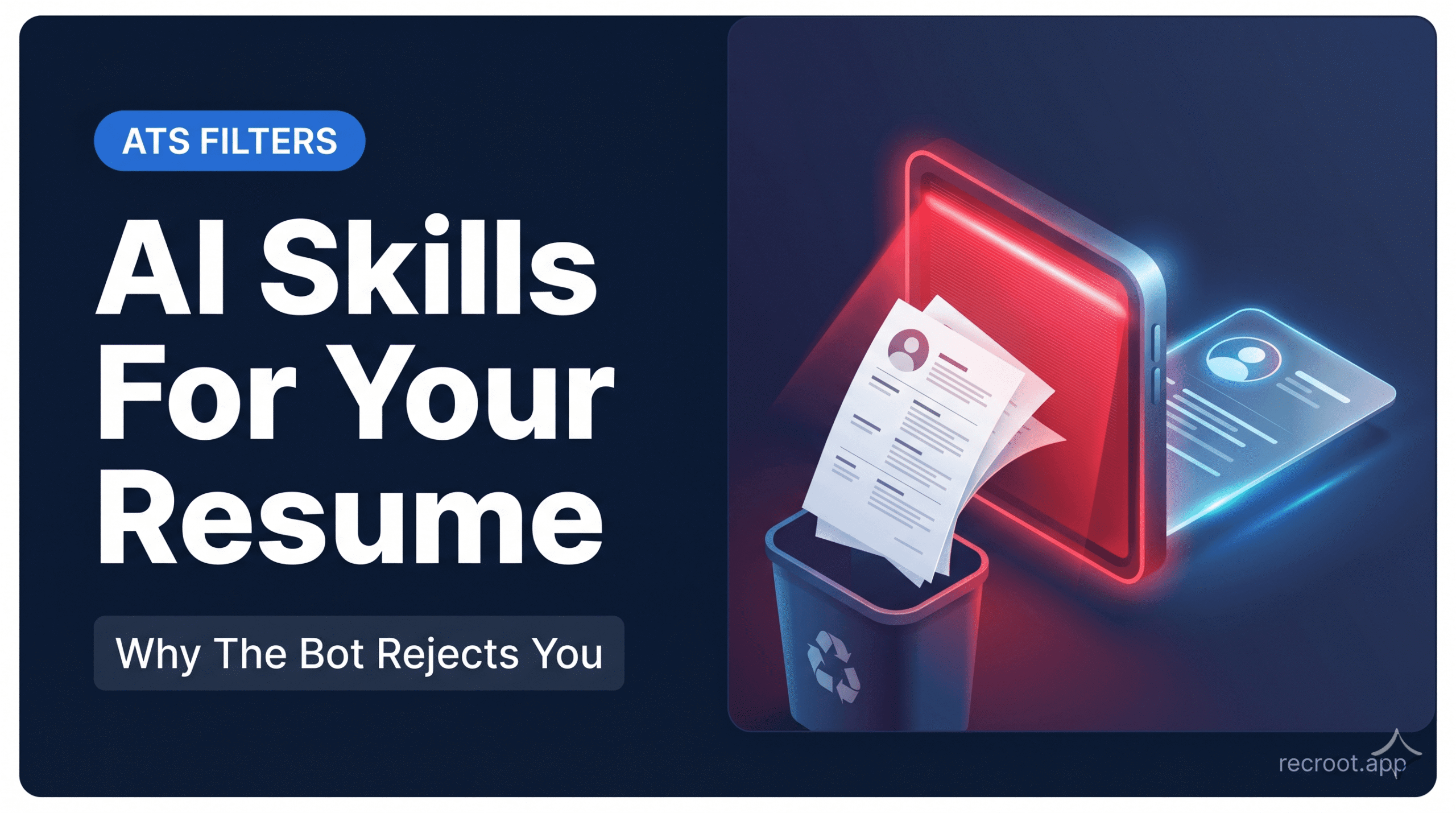
You carefully formatted every section, highlighted your projects, and submitted your application for an entry-level software engineering role.
Then, less than a minute later, you received an automated rejection email.
It is unlikely that a human recruiter reviewed your resume in that time.
Your application was most likely filtered by an Applicant Tracking System (ATS).
For many fresh graduates and early-career professionals, this creates another layer of job anxiety. Even if you have the right skills, your resume may never reach a human recruiter if it does not match what the hiring system is looking for.
In 2026, understanding how ATS systems work—and optimizing your profile with modern AI skills—can significantly improve your chances of getting noticed.
Why ATS Systems Reject Resumes
To improve your chances, you first need to understand why automated systems filter candidates out.
1. The Experience Keyword Gap
ATS software often matches resumes against the requirements listed in a job description.
The system may look for specific:
- Technologies
- Job titles
- Skills
- Certifications
- Years of experience
For example, if a job description asks for:
“3 years of React.js experience”
and your resume only says:
“Academic project using React”
the system may incorrectly classify you as under-qualified.
The solution is not to exaggerate your experience.
Instead, describe your actual work using industry-relevant language.
Example:
Instead of:
“Created a website using React.”
Use:
“Developed a React-based web application with reusable components, API integration, and responsive UI design.”
The second version provides more context for both ATS systems and human recruiters.
2. Missing Modern AI Skills
As AI becomes part of everyday software development, employers increasingly value candidates who know how to use AI tools effectively.
Many candidates list traditional technical skills but fail to mention how they use AI to improve productivity.
Adding practical AI skills can help demonstrate that you understand modern development workflows.
Top AI Skills to Add to Your Resume
You do not need to be a machine learning engineer to showcase AI skills.
Employers are looking for professionals who can apply AI practically.
Prompt Engineering
The ability to communicate effectively with large language models (LLMs) to generate useful outputs, such as:
- Code assistance
- Documentation
- Research summaries
- Content generation
- Problem-solving support
AI-Assisted Pair Programming
Using AI coding assistants to improve development speed and quality.
Examples include:
- Code generation
- Debugging assistance
- Refactoring support
- Faster learning of new technologies
AI Workflow Automation
Using AI and automation tools to reduce repetitive work.
Examples include:
- Connecting AI APIs with business workflows
- Automating reports
- Creating internal productivity tools
- Integrating AI into communication platforms
Example Resume Statement
Instead of simply writing:
“Used AI tools.”
Write:
“Leveraged AI-assisted development tools to accelerate feature delivery, improve debugging efficiency, and increase development productivity.”
Specific outcomes make your experience more valuable.
The Better Strategy: Move Beyond ATS Optimization
You can spend hours rewriting your resume to satisfy automated filters.
However, keyword optimization alone does not prove your ability.
The strongest candidates are moving toward skills-based hiring, where employers evaluate what you can actually do.
AI-powered recruitment platforms allow candidates to demonstrate their capabilities through:
- Technical assessments
- AI interviews
- Skill verification
- Real performance data
Instead of only telling recruiters what you know, you can provide evidence.
Platforms like Recroot help candidates showcase verified skills and interview performance through AI-powered evaluation.
Key Takeaways
- ATS systems can filter resumes before recruiters ever see them.
- Use clear, industry-standard language to describe your experience.
- Include practical AI skills that demonstrate modern workplace readiness.
- Focus on measurable achievements instead of only listing technologies.
- Skill verification and AI interviews can help candidates move beyond traditional resume screening.
Frequently Asked Questions
How Can I Check If My Resume Is ATS-Friendly?
A simple test is to:
- Open your resume PDF.
- Select all text.
- Copy and paste it into a plain text editor.
- Check whether the content appears in a logical order.
If the text is difficult to extract or appears incorrectly, ATS systems may also struggle to read it.
Do I Need Coding Experience to Add AI Skills?
No.
Not all AI skills require programming.
Skills such as:
- Prompt engineering
- AI-assisted productivity
- Workflow automation
can be valuable across many roles, including operations, marketing, business analysis, and product management.
How Can I Bypass ATS Screening?
Instead of spending all your time optimizing PDFs, focus on proving your capabilities.
Build a strong professional profile, verify your skills, practice AI interviews with LEA, and showcase evidence of what you can actually do.
The future of hiring is moving from resume claims toward demonstrated skills.
Blog
This section provides an overview of the blog, showcasing a variety of articles, insights, and resources to inform and inspire readers.
-

How to Present Confidently at Work (Even If Public Speaking Isn’t Your Strength)
A practical guide to improving your presentation skills, communicating with confidence, and delivering effective presentations…
-

How to Lead Meetings at Work: Practical Tips for Managers and Professionals
Learn how to prepare, facilitate, and lead productive meetings that keep discussions focused, decisions clear,…
-

How to Speak Confidently at Work: What I Learnt After Struggling for the First Five Years of My Career
A practical guide to improving workplace communication, speaking up in meetings and building confidence as…
